

What twenty nurses taught me about culture

written: May 8, 2026
Published: September 9, 2026
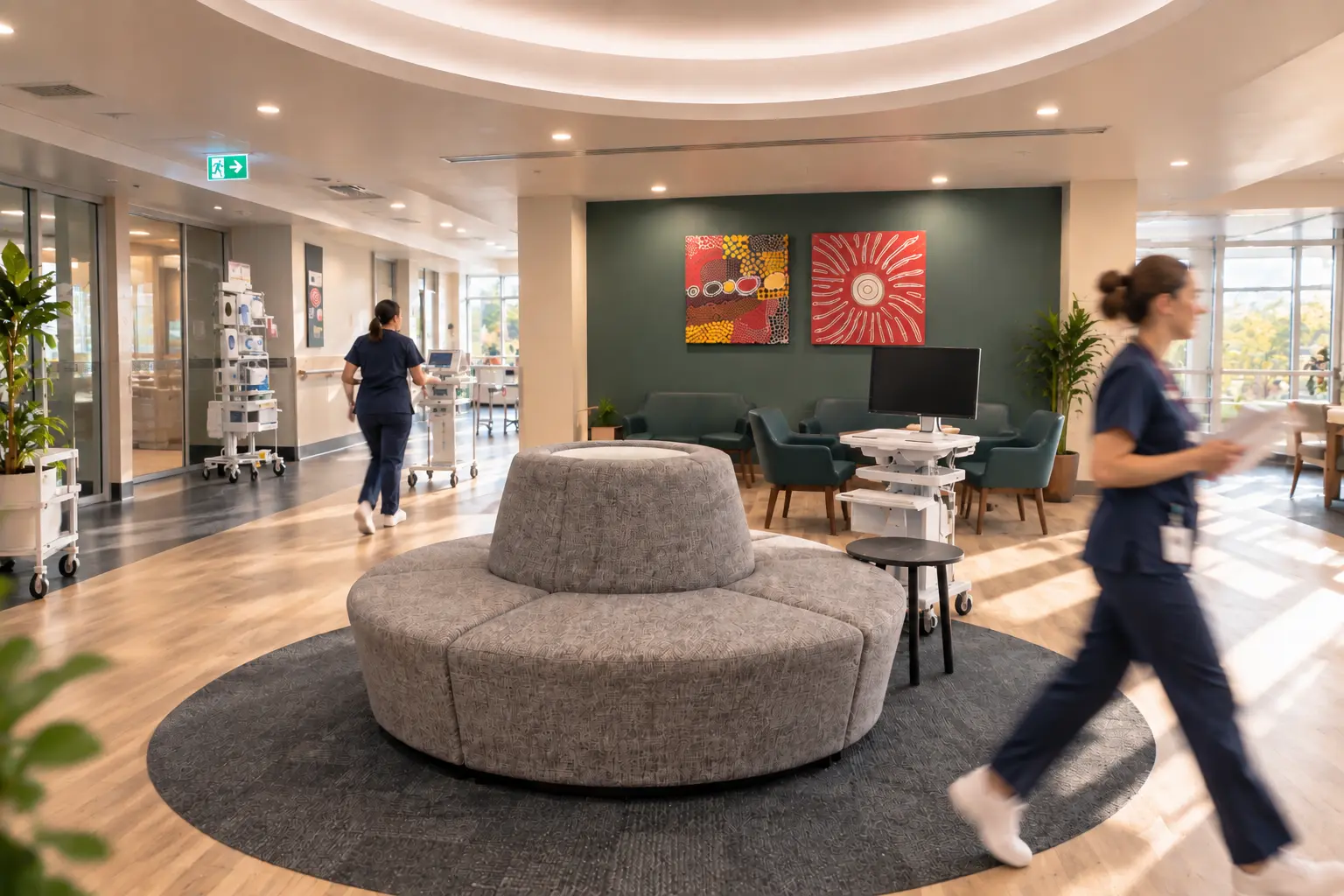
I have been looked after by more than twenty nurses in four days at the Mater Hospital.
Different shifts. Different ages. Different personalities. Some warm and chatty, some quiet and efficient, some with a particular gift for making you feel like the only patient they have.
And every single one of them is at the same standard. Not a similar standard. The same standard, the same kindness, the same attentiveness, the same sense that your comfort and your dignity actually matter to the person in front of you.
I built a company for over a decade, I have thought about culture more than almost anything else in my professional life and I know how difficult it is to achieve anything like this.
{{Section-break}}
The Mater Hospital was founded in 1906 by the Sisters of Mercy. One hundred and twenty years of operating from the same founding mission; care and compassion, a holistic approach, the dignity of every patient.
That is not a culture programme, that is institutional memory, the kind that does not live in any policy document but in the daily practice of people who absorbed it from the people before them.
Culture is not what you say you value, it is what the twenty-first person you hired does when nobody is watching, that is the only test that matters.
{{Section-break}}
The question I keep returning to is this: why is this so rare?
The Mater is not unique because it has exceptional individual nurses, it is unique because it has found a way to make exceptional the standard rather than the exception. The outlier in this hospital is not the extraordinary nurse, the outlier would be the ordinary one.
Most organisations are the inverse of this, the extraordinary person is the exception. The culture is defined by the average, which tends downward over time as the original formation gets diluted by growth and pressure and the gradual replacement of people who absorbed the founding values with people who only read them in an onboarding document.
What prevents that dilution is not a better onboarding document. It is the quality of formation at the point of entry, hiring people whose existing values align with the culture you are building, so that the culture is reinforced rather than diluted with every new person who joins.
The standard here is not maintained by supervision, nobody is watching whether the night nurse is kind enough. Culture can’t be policed, it is hired for, aligned to, and it is the daily practice of the existing culture being visible enough that new people absorb it through proximity rather than instruction.
{{Section-break}}
On my last morning, I was booked to spend time with the therapy dog. The clinical excellence I expected, the therapy dog I did not. That is the difference between a culture that meets the standard and one that has internalised it so completely that it keeps going past the standard into something nobody asked for and everybody needed.
I will go home from this hospital with higher standards than I arrived with. Not just for healthcare, for what I know is possible when a group of people is genuinely aligned around something they actually believe.
I have experienced from twenty different nurses across four days, that the gap between stated values and lived behaviour can be closed. That the standard can hold. That what a founding mission said in 1906 can still be felt by the patient in the bed in 2026.
That is what deliberate formation produces, over time, when it is genuinely meant.
— Sabrina
Written from the Mater Hospital, Sydney, May 2026