
The muscle of beginning again

written: November 4, 2025
Published: September 16, 2026
Recently I was invited onto a podcast. The interviewer was a great listener, someone who listens properly, who follows the thread of what you're actually saying rather than the thread of their prepared questions. And somewhere in the middle of the conversation, a pattern emerged that neither of us had planned for.
He noticed it first, he said: Sabrina, one thing I keep hearing is that you start small and build. That you're not afraid to begin from almost nothing, where did that come from? Can you take me back to when that started?
I have been asked many similar questions before, about resilience, about risk tolerance, about how a founder develops the capacity to begin again after a setback.
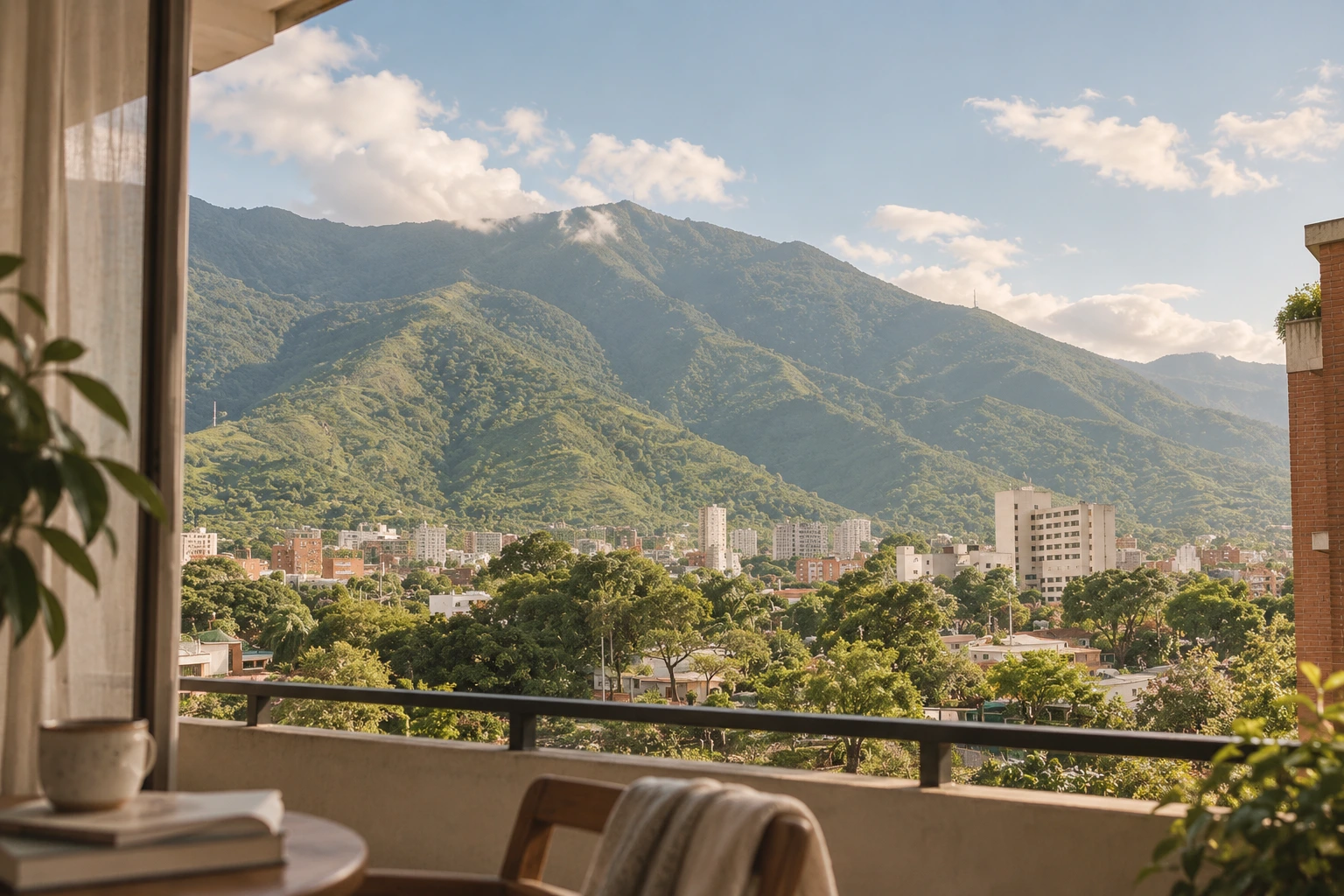
But something about how he asked it sent me somewhere I hadn't expected to go. I went back to being sixteen years old, alone in Caracas, in the first weeks of a life I had no template for.
{{Section-break}}
I had left my hometown to move to the capital, alone, at sixteen years old, which is young even for Venezuela, where independence tends to come earlier than in many places but not quite that early. I moved because I had a big dream and I didn’t want fear to stop me (nor mine and nor my parent’s fear). I remember the feeling of arriving somewhere enormous with no map and no one to help me find my way.
That first year in Caracas, my father left our family. Not the story I want to tell in full right now, but the consequence that matters here is that the financial support I had been counting on disappeared, I was seventeen, I had my studies, a rented room, and expenses that now had no source of income behind them.
Almost by accident (through a conversation with two friends who were also applying) I found a scholarship, I applied and I got it. Suddenly, at seventeen, I was covering all my own expenses. I took a part-time job at an accounting firm, I managed my own budget for the first time and I made decisions about money that most people my age had never had to consider.
Every year, there was a large down payment required to secure my place for the following year at university. Every year, I didn't quite have it. Every year, I had to be creative, sometimes just borrowing from friends, or just finding alternatives to get this money together.
It didn't break me.
And the reason it didn't break me is not that I was especially strong or especially brave or especially anything. It is that I survived it, and once you have survived something, your internal trust builds. You know, from the inside of your own experience, that you can. Not in theory. In fact.
Confidence is not the belief that things will go well. It is the accumulated evidence that you have handled things when they didn't.
{{Section-break}}
When the interviewer asked me to go back to where it started, I thought of a passage I love from Brian Weiss famous book Many Lives, Many Masters, the regression in which a patient, asked to return to the source of her anxiety, finds herself not in this life but in another, in ancient Greece, dressed in white, with a different name. The moment of origin was further back than expected, the wound older than the memory.
My version of that is a seventeen-year-old in a rented room in Caracas, borrowing money for a university deposit, learning to keep a budget, working mornings at an accounting firm, figuring out step by step how to build a life that nobody handed her.
That is where the founder was made. Not in the boardroom. Not in the pitch meeting. Not on the many occasions I had to make things work or the morning the acquisition was announced. In that apartment. In that year. In the accumulated experience of having no option but to start small and figure it out from there.
Everything that came after was a variation of that same skill. Moving to Australia alone, without speaking the language, without knowing anyone, that was not a new type of courage. It was the same muscle, exercised again. Starting the company with two desks and a problem and no guarantee, the same muscle. Beginning again now, in this new chapter, with new projects and a clear sense of who I am; the same muscle, stronger for every use.
{{Section-break}}
I want to name what this muscle is, because I think it is misunderstood.
It is not fearlessness. I have been afraid at almost every beginning, afraid when I left home at sixteen, afraid when I arrived in Australia and didn't know the language (or anyone), afraid on the morning we pitched investors for the first time, and afraid now, starting again in a new chapter after the hardest professional year of my life.
What changed is not the absence of fear. It is the presence of evidence, the internal accumulation of proof that I have been here before, that the unknown has previously resolved into something navigable, that the thing I thought I could not do I somehow managed to do anyway.
That evidence is not transferable. You cannot borrow it from someone else's experience or absorb it from a book or a podcast or a motivational talk. It can only be built through exposure, through the repeated experience of beginning something without certainty and discovering, on the other side, that you did not break.
This is why I believe so strongly in giving children experiences of managed difficulty. Not to make their lives hard but to allow them to build that evidence. The swimming lesson that was uncomfortable. The class where she had to stand up and speak. The moment of going after the trolley alone. The ear piercing that hurt but that she chose. Each of those moments is a deposit into an account that will pay out, compounding, for the rest of her life.
Because one day she will be seventeen in a city that feels enormous, and the money will not come, and she will have to figure it out. And what she will reach for, in that moment, is not what she was told she could do. It is what she has already done.
{{Section-break}}
The interviewer's question sent me back to Caracas, and what I found there was not a wound or a trauma or a story of deprivation. What I found was the beginning of a self I have been building ever since. Someone who learned, in a city she had no claim on, that she could navigate the unknown by starting where she was and building from there.
That is not a special capacity, it is available to anyone who is willing to be exposed to the experience of beginning. To start small without shame. To let the first attempt be imperfect. To discover, again and again, that the not-breaking is itself the formation.
You don't need to have been seventeen and alone in Caracas.
You just need to begin small, imperfect, without certainty, and let the muscle build.
It will take you places you cannot imagine right now.
I know. I am standing in one of them.
— Sabrina