
The dog always comes

written: July 28, 2026
Published: September 7, 2026
I bought a watercolour book for my first watercolour class (remember, the one I used for my Day One paintings). It had twelve sheets of cold-press paper, professional one that makes a real difference to what happens when paint meets surface. Fifty dollars and I was aware of how precious it was before I had touched it.
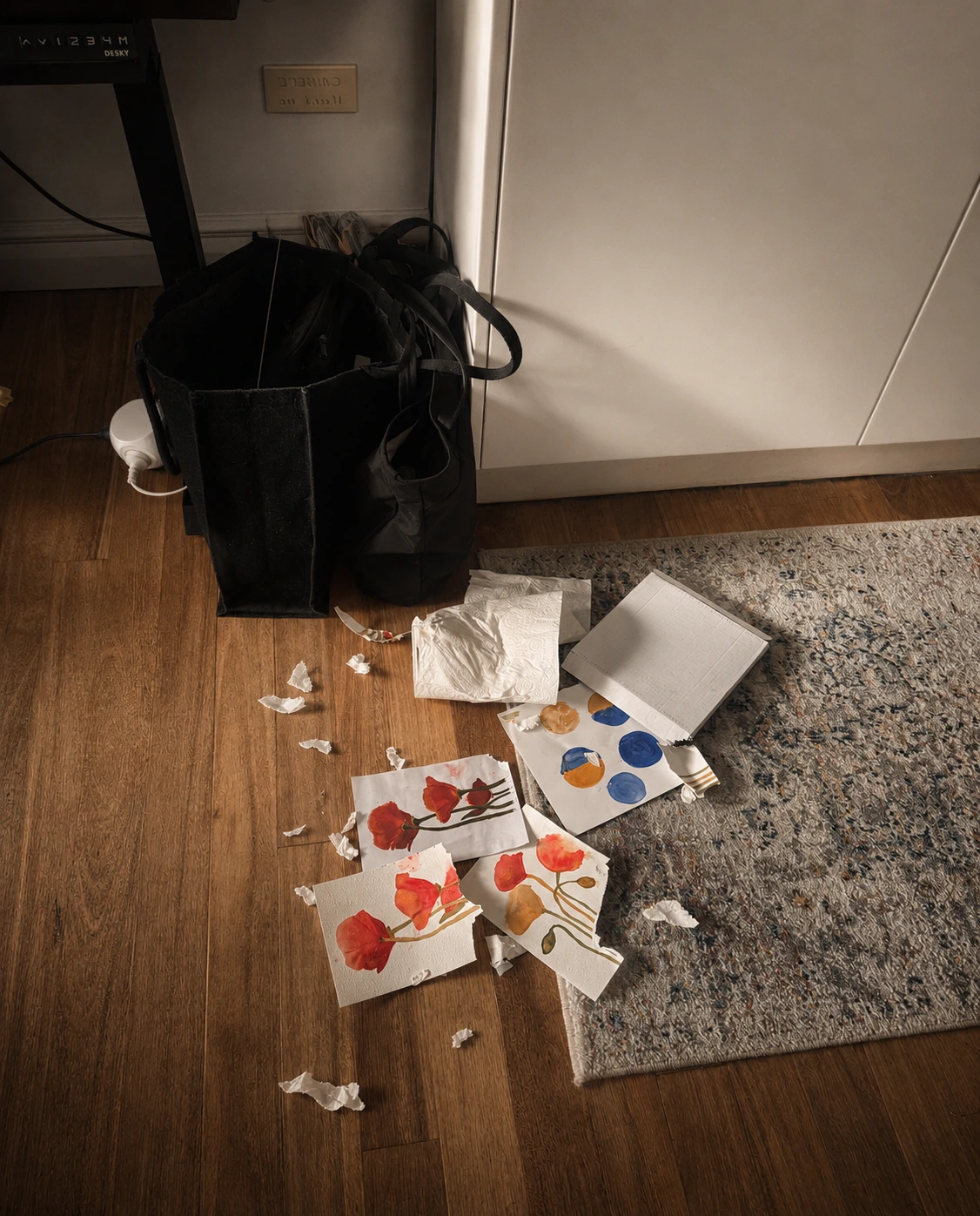
The class was everything I had hoped for. I painted poppies, orange and red, with long green stems, the way beginners paint flowers when they are discovering what the brush can do when you let it move without too much control. I was proud of them in the specific way of someone who has just made something with their hands for the first time in a long time. I took photos and I thought about the essay I would write.
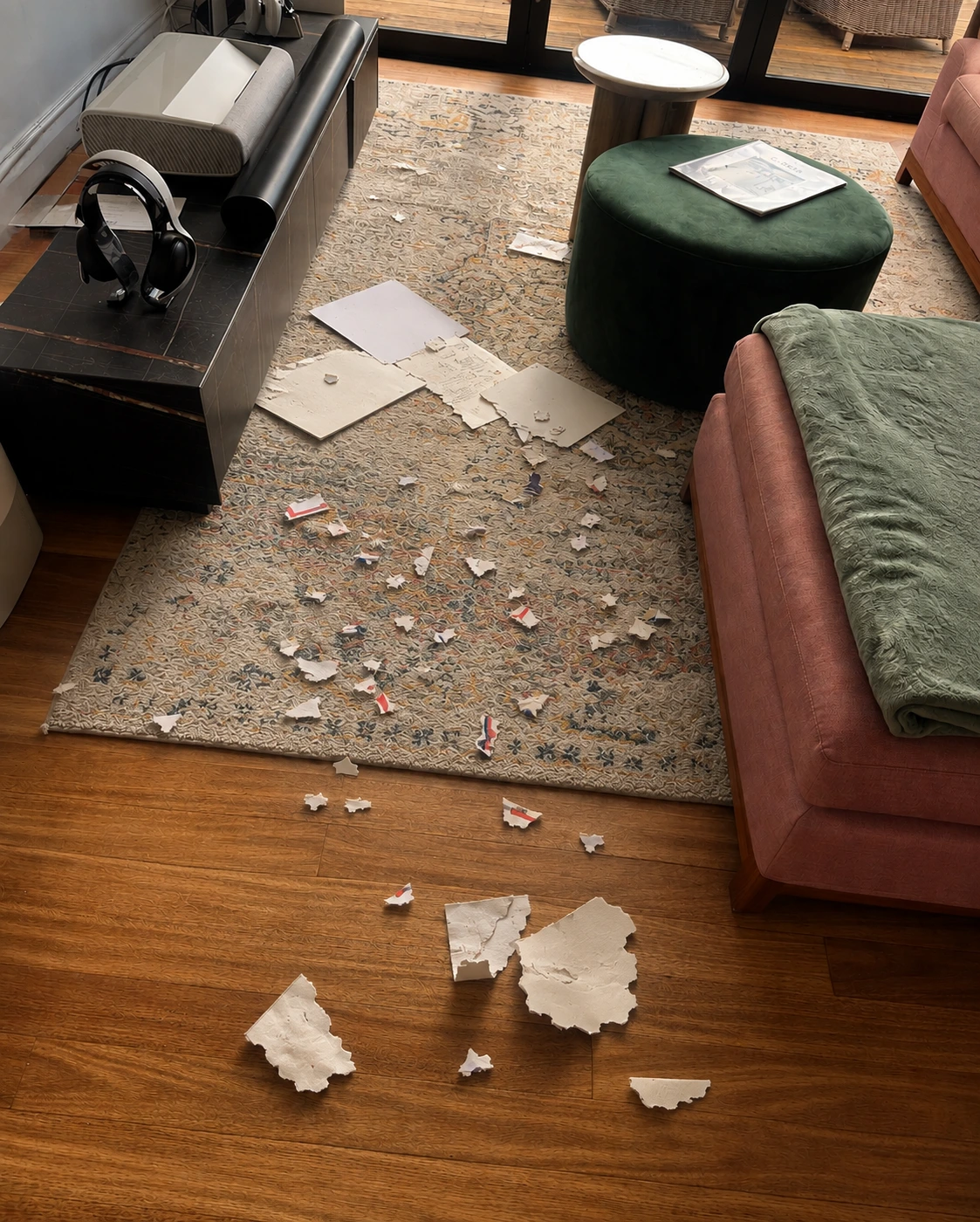
I brought the watercolour bag home and left it under my desk. I went out. When I came back, the living room looked like someone had broken in.
Paper everywhere. Torn into pieces across the rug, scattered onto the floorboards, shredded with a thoroughness that suggested real commitment. My beautiful poppies (the ones I had photographed, the ones I was going to write about) in pieces on the floor. And one of the precious fifty-dollar books, destroyed in little pieces.
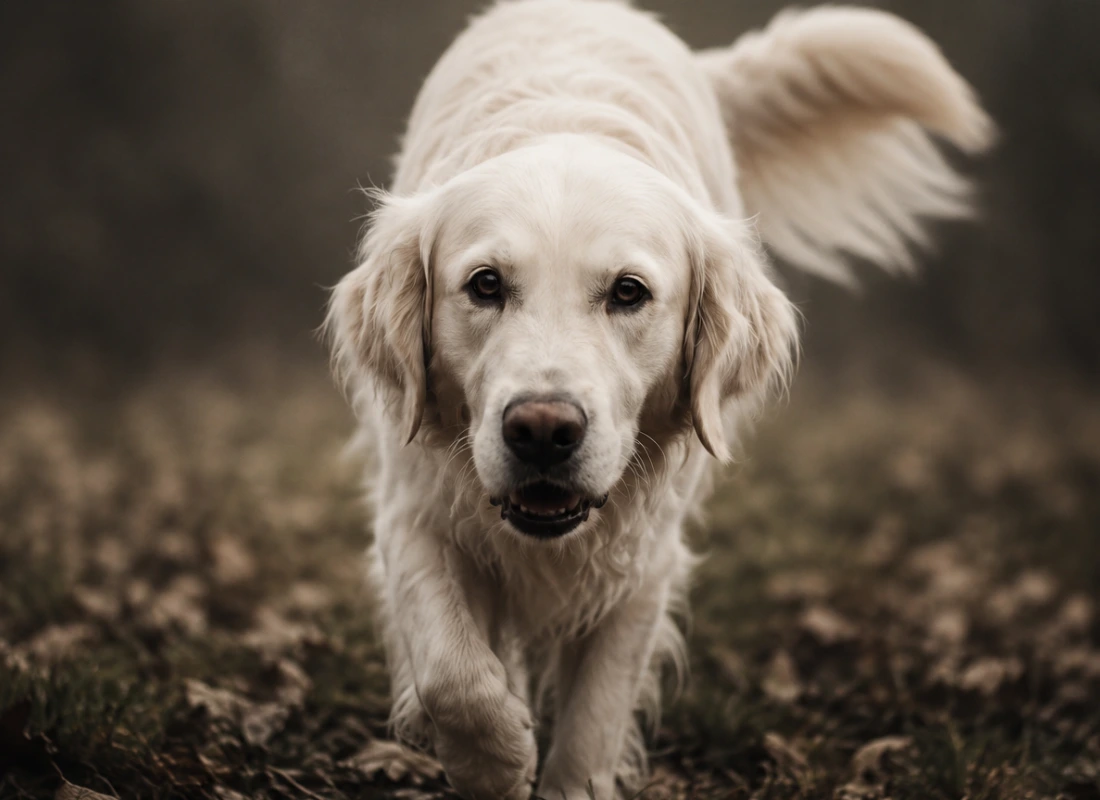
I stood there very confused. An animal? A break-in? And then I looked at the bag and saw it was full of white hair. Golden retriever hair!. My dog is thirteen years old. He has been doing things lately that he did not used to do, confused in ways that suggest the dementia that comes for old dogs the way it comes for old people. He had found the bag, opened it somehow, and eaten the paper.
My first watercolour paintings. Gone.
{{Paired-Images-1}}
{{Section-break}}
I did not write about it immediately. I needed a few days with it first, because I had the feeling there was something in it beyond the obvious comedy of a thirteen-year-old golden retriever eating fifty dollars of art supplies.
What I kept coming back to was how precious I had been about the paintings. The photographs before they were dry. The plans for the essay. The specific protectiveness of someone who has made something for the first time and wants to hold onto it, to show it, to have it mean something beyond the hour in which it was made.
And the dog, with his old confused mind, had simply eaten it. Without malice. Without any understanding of what it was. Just: paper, interesting, gone.
I thought about the Tibetan monks who spend weeks creating sand mandalas, intricate, precise, breathtaking works built grain by grain with complete attention. And then, when the mandala is finished, they destroy it. Not carelessly, ritually, deliberately, as the point of the whole exercise. The making was the practice. The attachment to the made thing is what the ritual releases.
The mandala was never the point. The attention was the point.
We make the mistake of treating the outcome as the thing. The finished painting. The completed company. The mandala. And then something arrives (a dog, an acquisition, time itself) and the thing is gone. What remains is only what we built inside ourselves during the making. That was always the only part that was ours to keep.
{{Section-break}}
I spent eleven years building a company. I was precious about it in ways I could not have named at the time, precious about the culture, the brand, the way we treated people, the specific quality of what we were making. I thought the big moment would be at the end. The exit. The outcome. The thing we had been building toward.
And then the dog came. Not literally, but the acquisition changed what the thing was, and the chapter ended in ways I had not anticipated, and the outcome was not the clean triumphant moment I had imagined when I was in the middle of the making.
What I have, now that it is over, is not the company. The company belongs to someone else now. What I have is everything the eleven years of making it put inside me, the knowledge, the relationships, the understanding of how things work and how people work and what matters and what does not. The resilience built through the hard parts. The clarity that arrived from going through something that difficult and coming out the other side still standing.
That is what the making gave me. Not the finished thing. The making itself.
I could not have told you that at the beginning. You cannot know it in advance. You have to make the thing (all the way through, with as much attention and care as you can bring to it) and then have it taken away or transformed or simply finished, and discover that what you thought was the point was never really the point at all.
{{Section-break}}
I am going to paint more poppies. Better ones, probably, because the first ones taught me something about what the brush can do. I am going to buy more watercolour paper and maybe stop being so precious about it, just paint.
And I am going to be less attached to the outcome of what I make. The outcome matters but being so attached to it is what makes the dog's arrival devastating instead of instructive.
The dog always comes. Not as punishment. As a reminder.
The mandalas get destroyed. The companies change hands. The paintings end up on the floor in pieces. And what you built inside yourself during the making, the attention, the practice, the specific knowledge that only comes from doing the thing, that is yours. The dog cannot eat it. The acquisition cannot restructure it away.
Stay in the making. That is where the point has always been.
— Sabrina